

05/05
2026
May 2026
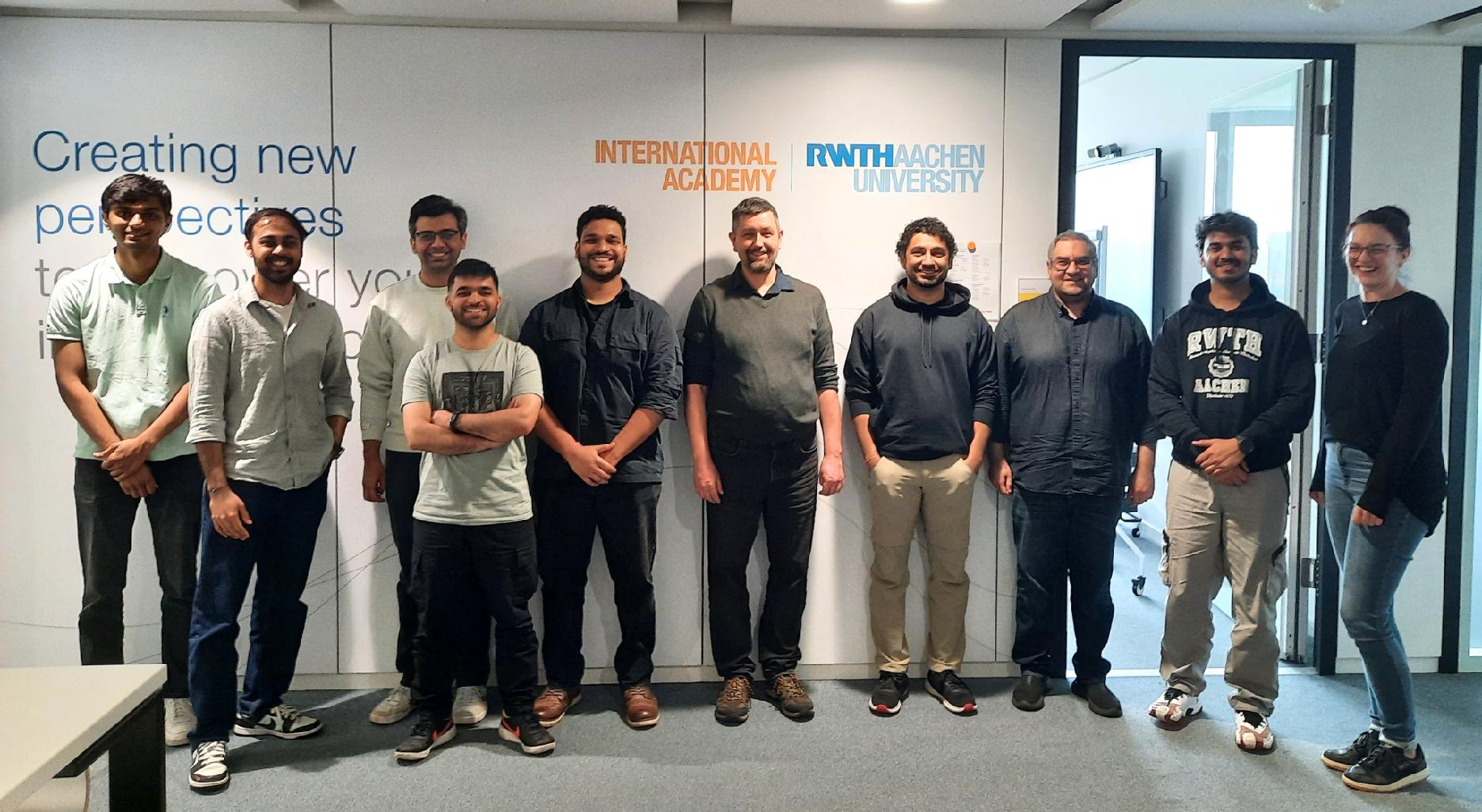
Collaboration with RWTH Aachen Continues
May – Dr. Šimon Kovář from the Department of Textile and Special-Purpose Machinery completed a teaching assignment as part of the Erasmus+ program. The internship took place at the RWTH International Academy, RWTH Aachen University. "During the internship, I led specialized courses focused on the topic ‘From Design to Production.’ The first part focused on new product development methodology, with an emphasis on new trends and the presentation of real-world examples. The second part dealt with the methodology for defining manufacturing tolerances using the GPS (GD&T) system and its applications within the context of model-based manufacturing (MBD) documentation. The final part was devoted to determining permissible manufacturing tolerances using tolerance analyses. “As part of the course, simple examples were solved, focusing on various approaches to these tolerance analyses,” Dr. Kovář explained. The teaching visit was another step in our collaboration see – June 2022, February 2023, and July 2023.
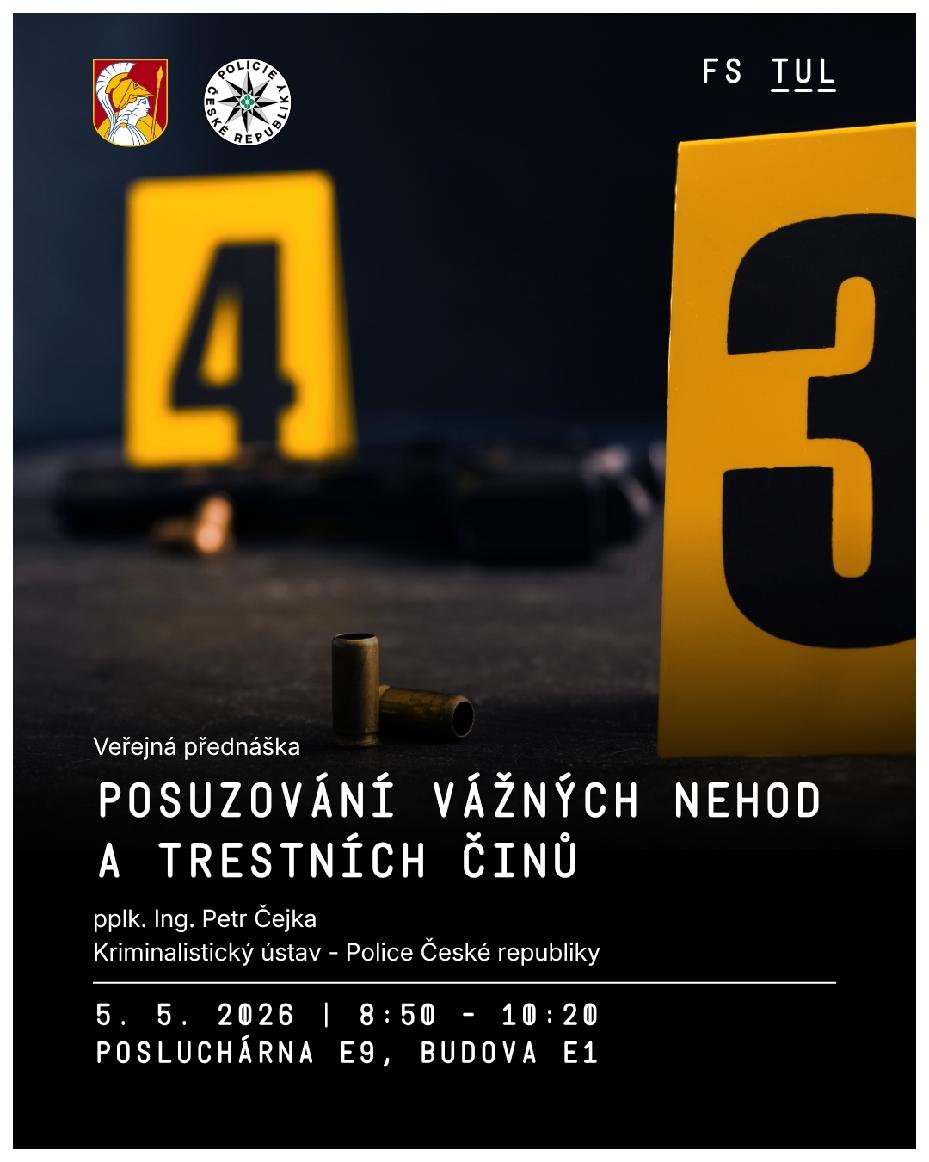
Assessment of Serious Accidents and Criminal Offenses
May, 5 – Lt. Col. Petr Čejka, M.Eng., from the Criminalistics Institute of the Czech Police accepted an invitation from the Department of Materials Science.
Success of TUL Faculty of Mechanical Engineering Students in Start-up TUL
May, 5 – Two award-winning teams from this year’s Start-up TUL competition, organized by the Student Business Club – TUL, include members from the Faculty of Mechanical Engineering. The winner of the competition was the RaceQ project, consisting of Patrik Skýpala (FS), Florián Klein (FS), Magdalena Jirsová (FT), and Michelle Jandová (FM). The team developed software to improve the driving performance of race cars. The program not only analyzes data but also simulates various scenarios and translates them into clear recommendations – for example, whether to change driving style or car settings. A major advantage is the ability to test different options without having to repeatedly drive on the track.
Third place went to Dan Havran for his SF-IZO project. He presented an innovative non-flammable insulation material suitable for both construction and industrial applications, such as insulating boilers or furnaces. He spent two years developing the material and is now in talks to test it with his first customers. Congratulations to all the winners and participants. You are an inspiration to us!
Meeting of the Scientific Council of the Faculty of Mechanical Engineering, TUL
Ma,y 6 – The inaugural meeting of the TUL Faculty of Mechanical Engineering Scientific Council for the 2026–2030 term took place.
Meeting of the Academic Senate of the Faculty of Mechanical Engineering, TUL
May,13 – At its 17th meeting, the Academic Senate approved the TUL Faculty of Science’s Strategic Plan for 2026–2030 and announced elections to the TUL Faculty of Science Academic Senate for the next term, which will begin in September 2026.
Technical Education – An Economic Field of the Past and the Future
May, 27 – A panel discussion was held with representatives of the Czech Armed Forces, the General Staff of the Czech Armed Forces, the University of Defense, and representatives of the Faculty of Mechanical Engineering at TUL.
How does the quality of technical education influence economic growth, productivity, and standard of living? Who will build the economy of the future? Is the shortage of technical talent a national challenge? How much will the Czech Republic pay to attract the necessary experts? How critical will this be for strategic investments and meeting the state budget? Could a shortage of technical experts pose a security risk? The Czech Republic’s Competitiveness in Europe: How do we stack up against technologically advanced countries? The Role of Technological Powerhouses: What strategic advantage does it offer when other countries absolutely need you for their day-to-day operations? Building the Czech Republic of the Future: How, for example, can we connect schools at all levels with the military and industry?
“We’re trying to bring these new technologies into the military, and of course we need to collaborate with universities—and not just them, but also high schools and similar institutions. As part of the ‘Next-Generation Communications Specialist’ campaign, we’re trying to attract new specialists to the ICT field,” says Brigadier General Petr Šnajdárek, director of the Communications and Information Systems Section at the Ministry of Defense.
May in the Sign of Summer Schools
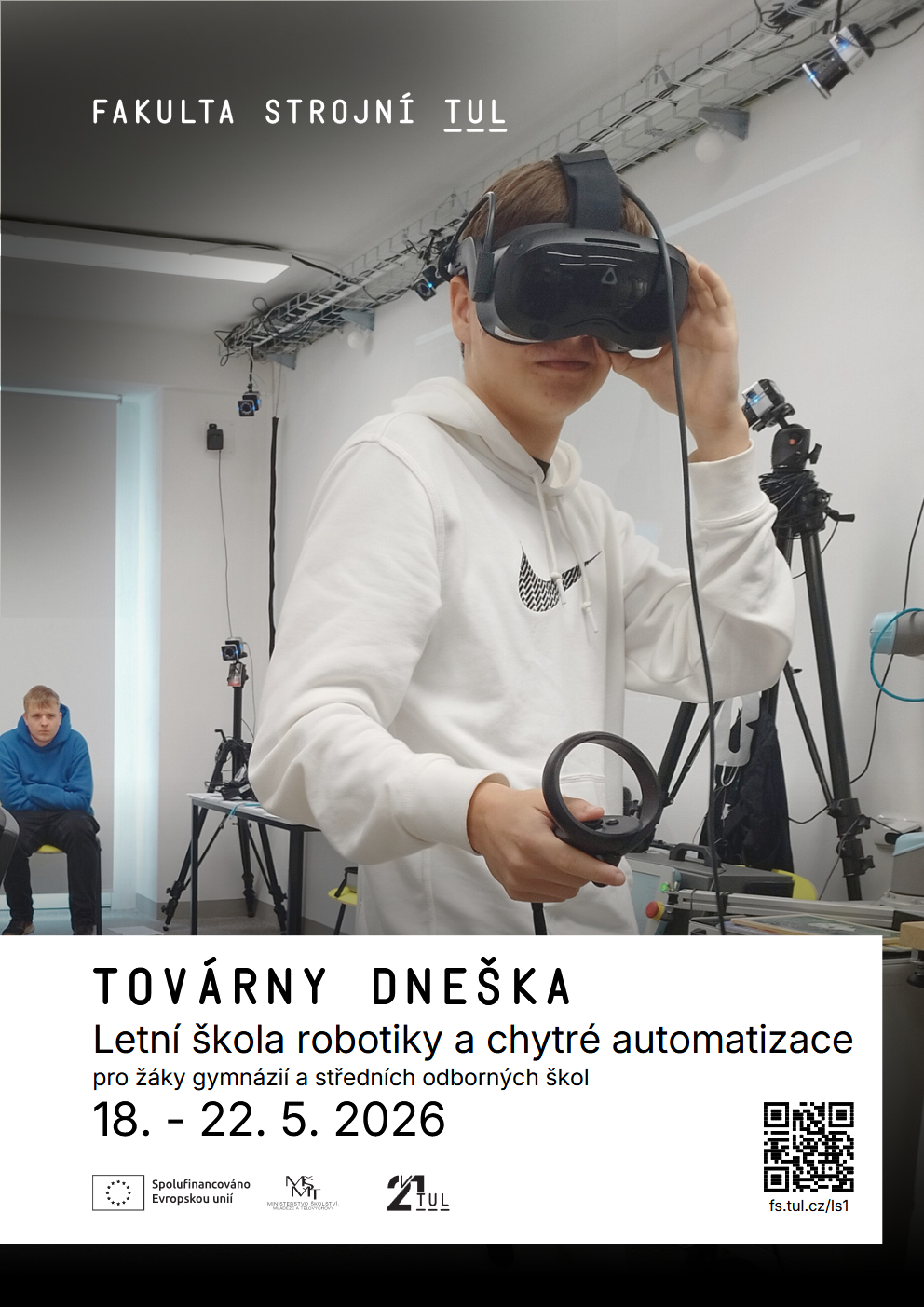
May, 18 to 22 – Summer School of Robotics and Smart Automation
Participants included students from the Mnichovo Hradiště High School, the TOS Varnsdorf Technical High School, and the Mladá Boleslav Technical High School. Hands-on workshops focused on robotics and pneumatic drives, automated control, 3D printing, and XR technologies—a week full of technology, hands-on experience, and smart solutions.
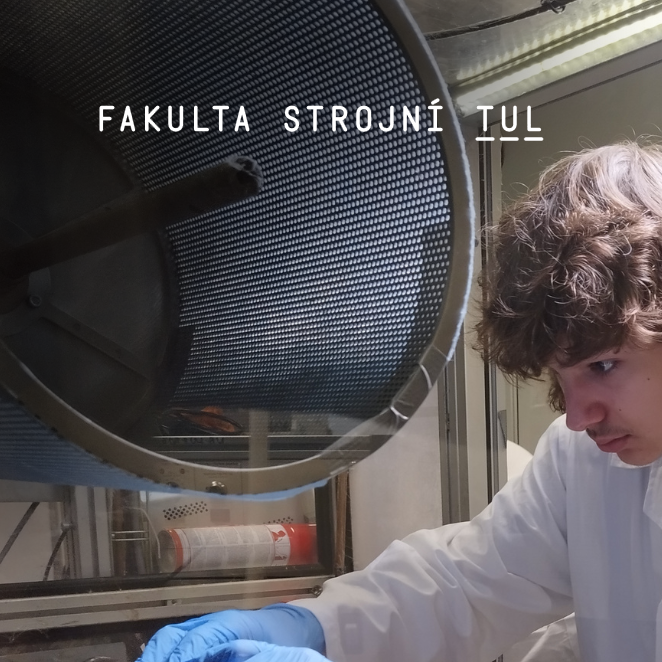
Summer School on Advanced Materials
May, 25 to 29 – Together with students from the F.X. Šalda High School and the Mladá Boleslav Technical High School, we entered the world of polymer nanofibers. The first few days were devoted to designing their own spinnerets—key components of nanofiber production equipment. The students designed it themselves, had it printed on a 3D printer, and then examined its properties both from the perspective of fiber spinning technology and during the actual production of nanofibers right in the lab. Afterward, the students went to the materials lab, where they tried their hand at producing a geopolymer composite and applying thin films. Great energy, curiosity, and a desire to try new things accompanied us throughout the day.
The Czech Ministry of Education, Youth, and Sports Published the Results of the University Evaluation
On May 29, 2026, the Ministry of Education, Youth, and Sports of the Czech Republic published the evaluation of research organizations in the higher education sector. The evaluation process is defined by the M2025+ Methodology for the Evaluation of Research Organizations. It defines the principles, procedures, and indicators of quality, performance, and societal relevance of research activities at Czech universities. The evaluation combines quantitative and qualitative indicators, emphasizing the international dimension of activities and the strategic framework of universities. The evaluation is conducted by an International Evaluation Panel established for each institution. The first evaluation took place in 2019 and covered the 2014–2018 period.
In 2025, the second evaluation took place, covering the 2019–2023 period in Module 3 (faculties); strategic Modules 4 and 5 (TUL) were also evaluated for the year 2024. The Faculty of Mechanical Engineering received a final grade of “very good” (grade B) in Module 3. The Technical University of Liberec received an overall grade of B, improving by one grade compared to the previous evaluation (2014–2018). The results and outputs provide feedback for institutional evaluations, offer a framework for the allocation of public funds for the long-term development of research institutions and universities, and strengthen transparency and accountability in Czech higher education research.
The Czech Ministry of Education, Youth, and Sports Published the Results of the University Evaluation
On May 29, 2026, the Ministry of Education, Youth, and Sports of the Czech Republic published the evaluation of research organizations in the higher education sector. The evaluation process is defined by the M2025+ Methodology for the Evaluation of Research Organizations. It defines the principles, procedures, and indicators of quality, performance, and societal relevance of research activities at Czech universities. The evaluation combines quantitative and qualitative indicators, emphasizing the international dimension of activities and the strategic framework of universities. The evaluation is conducted by an International Evaluation Panel established for each institution. The first evaluation took place in 2019 and covered the 2014–2018 period.
In 2025, the second evaluation took place, covering the 2019–2023 period in Module 3 (faculties); strategic Modules 4 and 5 (TUL) were also evaluated for the year 2024. The Faculty of Mechanical Engineering received a final grade of “very good” (grade B) in Module 3. The Technical University of Liberec received an overall grade of B, improving by one grade compared to the previous evaluation (2014–2018). The results and outputs provide feedback for institutional evaluations, offer a framework for the allocation of public funds for the long-term development of research institutions and universities, and strengthen transparency and accountability in Czech higher education research.